by Tony Hyman, Ed.D.


Hyman’s National Cigar Museum

Museums have five functions: collect, conserve, interpret, catalog and exhibit. 

In 1952, I decided to build the Cigar Industry’s Museum. This is the result.


FEATURE

EXHIBITS


FELTS-FLANNELS

Give-away phenom


1880s LADIES 

Sex comes to cigars


HAND TOOLS

Identification guide


FRAUDS, FAKES

& FANTASIES

And other things that are not cigar


3,700 CUBAN CIGAR BRANDS

Most complete list

ever published


HEALTHY CIGARS

Good for you


What’s New?

LATEST REVISION 06-17-09

SEE WHAT’S BEEN ADDED

NEW_EXHIBITS


Site Outline

Overview of what’s here


Cigar History

Tales previously untold


Making Cigars

By hand & machine


Selling Cigars

The fun and frolic


Types_of_Cigar_Boxes

A good place to start


Types of Wooden Boxes

Endless possibilities


Types of Tin Boxes

Since the 1870’s


Other types of Boxes

Cardboard, plastic, etc.


Novelty Boxes

Since the 1870’s


Dating Cigar Boxes

It’s easy


Advertising Themes Labels, labels, labels


NEW

Premiums

Girlie pix to automobiles


Cuba

A sad wonderful story


Canada

Bigger than you think


Cigar Definitions

What they really mean


Accessories

Cutters, lighters, more


Bibliography

Of books & magazines


The_Museum

Tony, visiting, selling to


SPECIAL EXHIBITS


Frauds-Fakes-Fantasies

Other things not boxes


Censorship_and_cigars

Boobs and butts


Children and Cigars

Junior cigar fiends


Chuck Tuthill Collection

Bequeathed to me


Made from Boxes

Such clever people


Here’s how I did it


        Researching the cigar industry is like building a giant jigsaw puzzle after the pieces have been scattered through a leafy Fall forest. The search is for tidbits without knowing the final picture. 

In 57 years, I’ve discovered it to be an amazing story with some genuine surprises.  I learned


        [1]  the domestic cigar industry is almost 250 years old, and is much larger than previously recorded, involving a quarter million cigar factories, hundreds of label printers, a thousand box factories, hundreds of thousands of salesmen and millions of wholesalers and retailers


        and


        [2] that cigars had more to do with the development of modern advertising and packaging than any other industry, creating more than 2,000,000 brands of cigar in the process.


        Hyman’s National Cigar Museum is designed to tell the stories behind all those folks and all those brands, the processes and procedures, the battles and strategies, the schemes, the triumphs and failures. The story is huge. 


        When it came to using the package to attract the customer’s eye, the cigar industry did it earlier and more adventurously than anyone. In the 1800’s, the folks who made and sold cigars tried every advertising image, gimmick and theme used today.


    As pioneers, they tried a lot of bad ideas  as well. There were no precedents, polls or web-sites to advise against using dead moose, skunks, goats, drunks, spiders, wasps, rattle snakes, funerals and Satan to sell cigars. Sellers had to learn to focus instead on pretty girls, dogs, cute kids, sports, celebrities, good health, good times, wealth and more pretty girls instead. Experimentation was constant.


        Unlike today when a few large companies decide brands and brand names,  cigar companies, salesmen, wholesalers, retailers and even customers got into the act. Everyone created brand names. Advertising anarchy.


Few people recognize the cigar industry’s importance because it has never had a champion. The industry was fragmented into millions of small  difficult-to-find pieces, yet is a fascinating tale filled with clever entrepreneurs, advertising pioneers, package innovation, union precedents, government regulations, bribery, counterfeiting and tax evasion.


         It’s the greatest story ever NOT told.


The National Cigar Museum is my way of sharing the tale and the artifacts I’ve found. As long as I’m alive, the Museum will be a work in progress.  I’ll be 68 the day the first posting is available to the public. I plan to ultimately post 300 chapters. Since I learn something new every week there will always be more to tell. Whim, convenience, and reader requests will help determine which topic comes next. 


What you’ll see and read in the Museum is personal and idiosyncratic.  I am an information junkie and compulsive teacher.

I take full responsibility for errors of fact, omission or interpreta-tion. If you think I’m wrong, misguided or ill informed, you might be right. Feel free to let me know. 


        I’m always glad to find another piece of the puzzle.


Tony Hyman

Central California coast

2009

Thank you:

  1. 1.Mom & dad for aiding and abetting my youthful interest in boxes;

  2. 2.Savers, pickers & dealers who sold these things to me;

  3. 3.Families who entrusted me with stories and memories;

  4. 4.Execs & workers in box and cigar factories who explained processes;

  5. 5.Clerks & librarians who dug through files;

  6. 6.Collectors who share[d] especially Howard Richards, Tom Somerville and Chuck Tuthill;

  7. 7.Jerry Golden who taught me how the cigar industry really worked;

  8. 8.David Diaz, EdD, who showed me how easy iweb was to use, and continues to be a friend, helper, and fellow appreciator of good beer; 

  9. 9.Lew Rothman of JR Cigars who understands how important this story is and put his money where his heart is;               

                                        and especially

My wife, friend, companion, and fellow adventurer Marilee who has

     always encouraged and supported my research and buying.

Photo: Dr. David Diaz

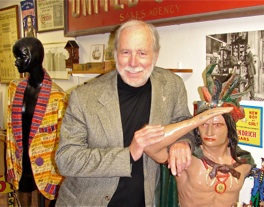
Tony poses “semi-wearing” the finest known example of a smoking jacket made from ribbons used to tie quarter, half, and full wheels (ruedas) of cigars. Exquisitely designed and executed around 1905 by Kathryn Morelan who lived with her tinsmith husband in a log cabin in the woods near Anacortes, WA.  Tony can only semi wear the garment which appears to have been made for someone with a smaller chest, narrower shoulders and much longer arms.

 
   YOU CAN REACH ME  
To give opinions, ask questions, suggest exhibits, make additions or corrections,   sell things, buy things or whatever...
<tony@cigarhistory.info>
tony@cigarhistory.infomailto:tony@cigarhistory.infoshapeimage_34_link_0