Street Vendors
The entrepreneurial spirit
A Cigar History Museum Exclusive
© Tony Hyman All rights reserved.
Illustration added: June 25, 2010
Illustration added: January 1, 2013
Street vendors peddled their wares in cities and in small towns worldwide. Everywhere there are poor people and local tobacco, someone will be selling cigars on the street, in parks or off the back of wagons and pickup trucks. Selling home-made cigars in the streets of Cuba goes back more than 200 years and almost that far in Europe and the United States. Chinese were frequent cigar vendors in New York, Boston and San Francisco. A cigar company Vice-President confided to me that he grew up in rural PA during the Depression of the 1930’s and remembers regularly selling untaxed and un-boxed home-made cigars out of the back of the family pick-up truck at saturday farmer’s markets.
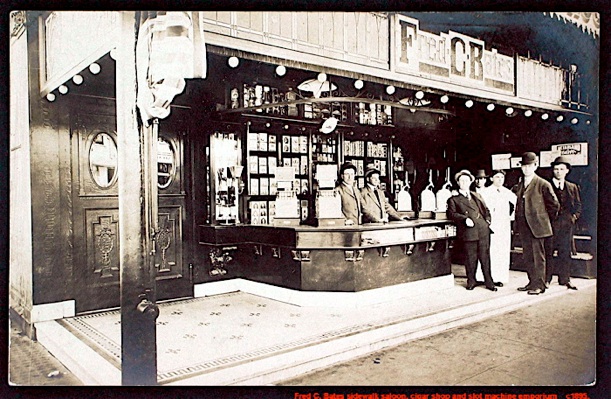
The good old days. A cigar and a shot right on the street.
Though saloons were everywhere in the 1890’s I doubt if this streetside ability to grab a quick one and lose a paycheck was common even in that more permissive society. Fred C. Bates was the proud owner, city unknown. This over merchandising of booze helped lead to prohibition.
[1870]
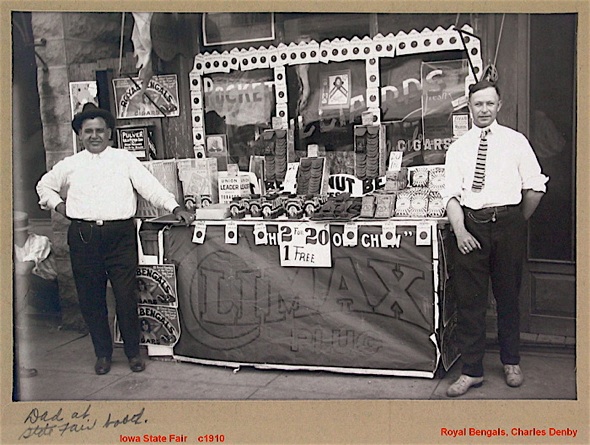
and Fendrich’s CHARLES DENBY cigars, as well as snuff and chewing tobacco. c1910
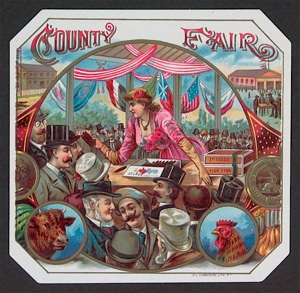
County & State Fair cigar sellers
Selling cigars in a Middle Eastern bazaar
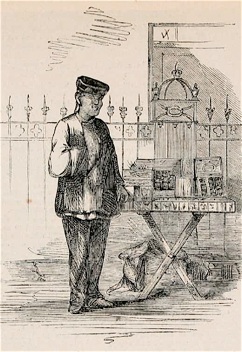
New York Chinese street vendor
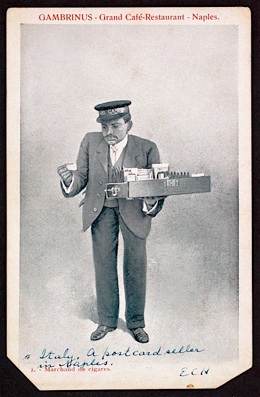
Neapolitan Marchand de Cigares
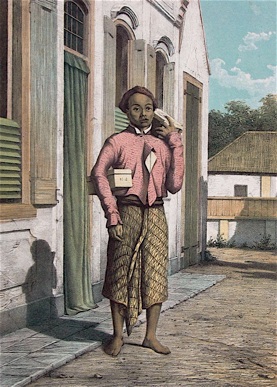
Sumatran street vendor
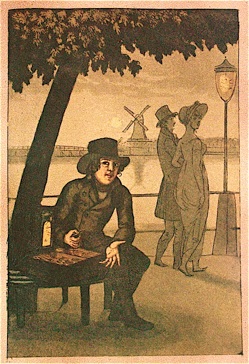
19th Century Netherlands park vendor
Beginning in the 18th century, Amsterdam was one of the world’s largest centers of the international tobacco leaf trade, and one of Europe’s most important cigar manufacturing centers.
Right: Cigar vendor offering a half dozen varieties of hand made cigars in a public park in The Nether-lands, c1885.
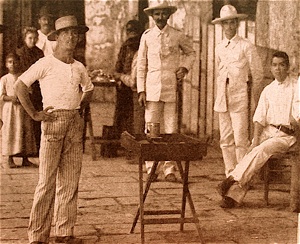
Street vendors in the Caribbean
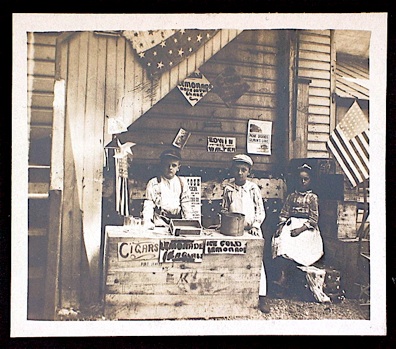
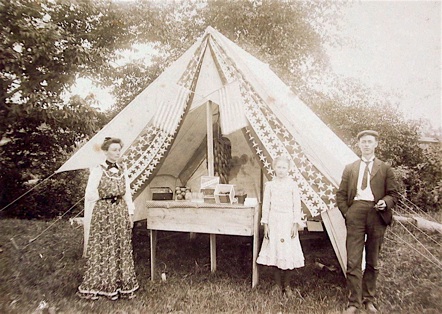
The family that sells together stays together
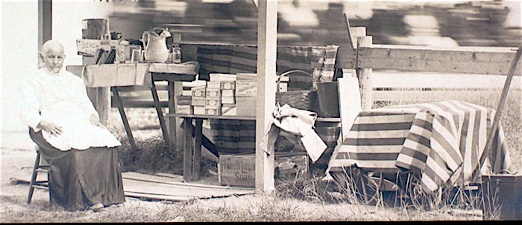
Grandma sold lemonade too
[1809]
Child lemonade sellers
Child match sellers
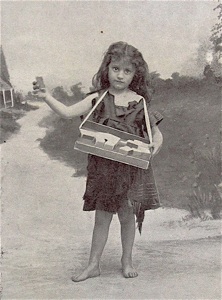
“Matches, sir? Please buy my matches. I need sell only three more boxes and I can buy something to eat. What’s a penny to a gent like yourself? It’s getting cold, sir, and dark soon, and these streets can be awful scary for a girl like me at night. Just a penny sir.”
This British postcard pictures the plight of tens of thousands of street urchins worldwide. In the 1800’s children as young as six sold matches, newspapers and smokes on the streets of big cities around the world.
[1802]
Women street sellers
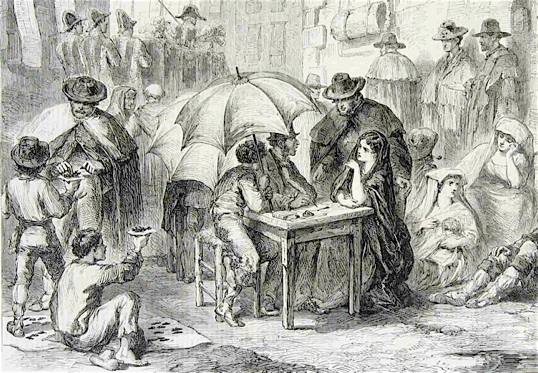
Selling cigar butts in the street, Rome 1850
The boys sniped butts in hotel lobbies and outside theaters as well as in the streets.
Illustration from an 1864 issue of Illustrated London News.
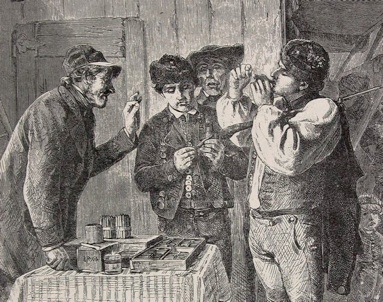
French flea-market cigar seller, 1869
Selling cigars loose in flea markets, farmer’s markets, fairs
and the like was common in both Europe and the United States. Though illegal in the U.S. after the Civil War, the practice continued through the Depression of the 1930’s.
Note that a selection of almost a dozen cigars and cigarettes was being offered.
Illustration from the Illustrated Times for January 30th, 1869. This is cropped version of original 10.25” x 8” illustrated entitled “The Cigar Dealer” from a picture y Hidemann.
London street sellers, 1851
“Cigars, I am informed, have constituted a portion of the street-trade for upwards of 20 years, having been introduced not long after the removal of the prohibition on their importation from Cuba.
It was not, however, until five or six years later that they were all extensively sold in the streets; but the street-trade in cigars is no longer extensive, and in some respects has ceased to exist altogether, [apparently as the licensed vendors/shops complained].... As the fuzees [matches...ed.], now so common, were unknown, and lucifer matches were higher-priced, and much inferior to what they are at present, the cigar seller in most instances carried tow with him, a portion of which he kept ignited in a sort of tinder-box, and at this the smokers lighted their cigars; or the vendor twisted together a little tow and handed it, ignited, to a customer, that if he were walking on he might renew his “light,” if the cigar “wouldn’t draw,”.... I am told that, on all favourable opportunities, there are still 100 persons who vend cigars in the streets of London, while a greater number of “London hands” carry on the trade at Epsom and Ascot races. At other periods the business is all but a nonentity. To clear 1£ a week is considered “good work.” At one period, on every fine Sunday, there were not, I am assured, fewer than 500 persons selling cigars in the open air in London and its suburbs.”
Henry Mayhew, LONDON LABOUR AND THE LONDON POOR, 4 volumes, London, 1851
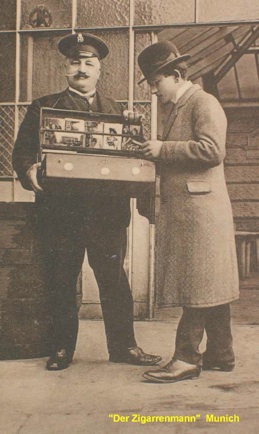
Der Zigarrenmann of Munich
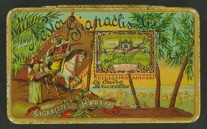
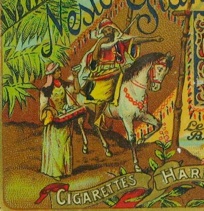
Desert oasis vendor
[10402] [10404]
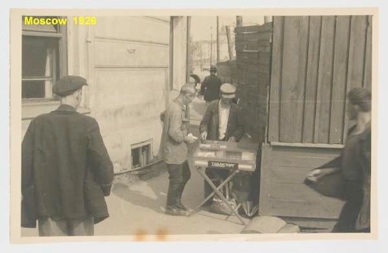
Moscow street seller, 1928
[10683]
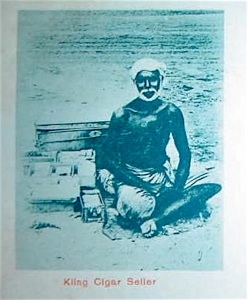
Kling cigar seller in Singapore c1910
It appears as if big fat smokes packed in a cardboard “shoe box” are among the offerings of this street entrepreneur. That style packaging was common for inexpensive cigars and cheroots in Asia and stogies and cheroots in the United States.
Photo not in the NCM collection.
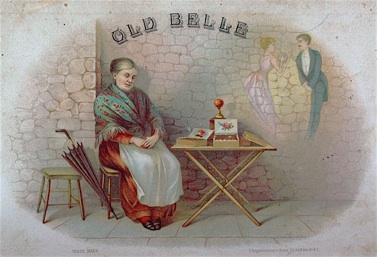
Old Belle quite possibly rolled the cigars she’s offering. This 1880’s cigar label gives a somewhat romantic portrayal of what was most likely a miserable existence.
[1884]
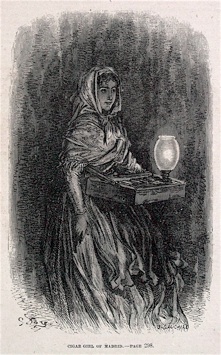
Female street vendors often worked late into the night hoping to sell to gents leaving the theater or bars at closing time, not the best hours to be on the streets of London or New York. Both women are carrying umbrellas for protection against the elements, perhaps with sharpened tips to help dissuade molesters. Note, too, they both carry oil lamps so their stock can be seen, and lit once selected.
See note on British street cigar sellers below.
Kids still have lemonade stands, but no longer offer cigars like these youngsters. I was 9 when I had one. To this day, when I see a stand, I stop and buy a drink. I urge you to take a few moments to support their entrepreneurship as well. It’ll make their day, and how often do you get a chance to do that?
But, I must admit, I rarely think of a kid’s lemonade stand when I want a cigar. Technically, adding cigars to their inventory was illegal without a tobacco retailer’s license. c1906. Decorations suggest 4th of July.
[1883]
They’re selling CUBANOLA cigars in their patriotic tent, probably set up in a park on 4th of July c1900.
Doubtful though it may be, it’s not known for certain whether they had any connection to the factory.
[1807]
Young boy offers two types of cigars on the streets in Sumatra, 1890s. Starting in the 1880s, that country was the source of some of the world’s finest cigar wrapper. South-East Asians in general tended to be heavy smokers of locally made cigars.
Since the 1850’s, cheroots, stogies and cheap cigars worldwide, including the U.S., were packed in cardboard boxes similar to today’s shoe boxes. Because they were light and flimsy, only a small percentage of them survived compared to their wooden counterparts.
Night clubs and restaurants in the U.S. and Europe frequently had roving “cigarette girls” who weren’t always the long legged lovelies portrayed in movies. European establishments were particularly likely to use men. Sellers like this restaurant employee might also be seen in a hotel lobby, men’s club, park, outdoor cafe, city square...or anywhere else men gathered.
The young Englishwoman who sent the card refers to this Naples, Italy, vendor as “a postcard seller,” which he was also, but the illustration is captioned ‘Marchand de cigares.‘
[1804]
Pre World War One German postcard depicts a Munich street seller proudly offering postcards and cigars. Like the previous postcard (above), this too is captioned as the cigar seller, ‘Der Zigarrenmann,’ although he sells other items as well.
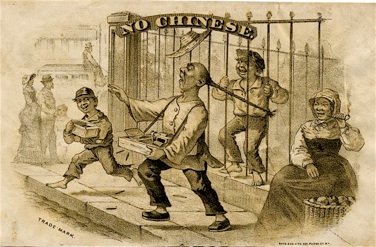
Chinese street vendors were most frequently seen in NYC, home of Boyd & Co., the lithographer behind the above racist portrayal which seems to approve of juvenile violence against them. Label not in NCM collection.
Chinese street vendor in NYC, 1856.
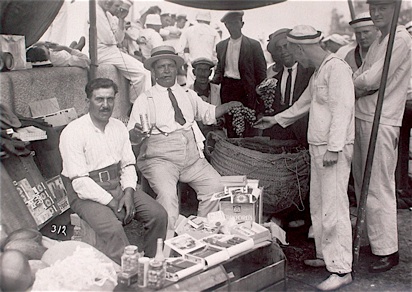
Havana cigars of dubious origin being offered to sailors by an entrepreneur in a Middle Eastern bazaar, c1935.
[1857]
Selling at state and county fairs has been around since before the Roman empire. The here-today-gone-tomorrow nature of fairs made them a great place for a pretty girl or a slick talking salesman to get rid of merchandise of all types, materials, qualities, ages and condition. Fair-circuit seller would often buy remainders, overstocks, and seconds from jobbers and factories, then regale passers-by with a fast talking patois: “Try one, sir. They’re just as good as Cuban, but one-third the price. As good as what you get in those fancy New York tobacconists, but you save by cutting out the middleman. We don’t have the overhead. Direct from factory to you. We buy in bulk and pass those savings on to you. Trade laws prohibit me from revealing the name of the famous maker. Buy five and get one free. Buy a box and save even more.”
The sample handed out by the lovely lass wasn’t always what was in the box you took home. Even if it were, it was not uncommon for the top row to be a better grade of cigar than those underneath just like rotten strawberries are always packed at the bottom of the basket. 19th century cigars were a chancy buy wherever you bought them, but no more so than from traveling hucksters.
[1806]
Top Left: Cigar vendors were a common sight in the plazas of Cuban towns, both large and small. The warm tropical climate meant throngs of people strolling well into the late evening providing customers. c1900
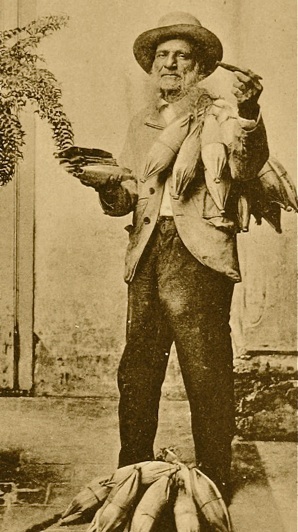
Top Right: Havana street vendor showing the contents of his yaguas, bundles of cigars wrapped in corn husks or palm. c1910
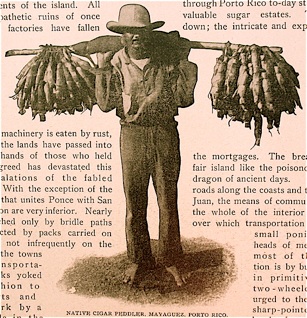
Center Left: Puerto Rican street cigar vendor offering yaguas from his shoulder yoke, as he walks the streets of Mayaguez, Puerto Rico c1900.
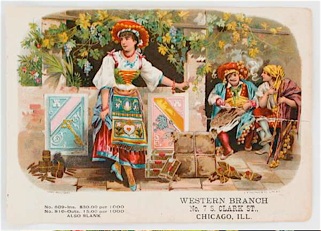
Bottom Left: Cigar label depiction of a lovely female street seller is colorful but more than a little fanciful. c1900
Berlin cigar, cigarette, tobacco and soup seller, c1925