LEFT: Small 3.25” x 6” all text 36 page fine-print catalog issued in 1903.  Readers were urged to send away for a full size FLORODORA catalog, one of the more attractive and comprehensive ever offered the public.

RIGHT: 7” flyer depicting the distinctive FLORODORA cigar label. Issued in 1901, the back of the flyer is a mini catalog listing Continental Tobacco’s 18 different products whose bands and tags could be exchanged for 90 different goodies; the “golden age” of coupon mania was still a few years away. According to the fine print a large catalog could be obtained by sending 2¢ for postage. The tag company had 30 redemption centers in 1903.


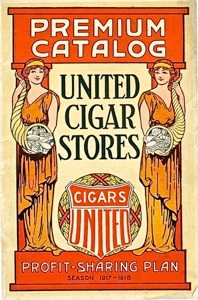
    Though many companies exchanged tags, bands or coupons for goodies, no one issued more catalogs and swapped more coupons and certificates (1 certificate = 5 coupons) than the United Cigar Store chain, which at its height had 2,000+ stores and 250 coupon redemption centers. They weren’t the first to issue coupons, as Continental Tobacco, P. Lorillard (a give-away king) and others preceded them.  They made up for not being first by being the biggest and lasting the longest.

    Starting in 1904, the then small chain of United Cigar Stores began publishing simple non-illustrated catalogs of household items and distributing coupons that could be traded for them. Every 5¢ house-brand item you bought earned one coupon. More expensive items earned higher value coupons. As the years passed, the catalogs grew bigger, showed tantalizing photos of the rewards, and expanded into a wider range of goods...all of life’s hard-goods necessities: furniture, silverware, dishes, clothes, rugs, drapes, sewing machines, toys, tools, baby carriages, fishing gear, sports equipment, pistols and shotguns, and everything else a pre-Depression household needed or wanted including a horse-drawn delivery wagon with your company name already inscribed.


    Critics argued that the money spent buying the tobacco would pay for the premiums many times over, an argument that ignored the fact a lot of chewing and smoking was part of the reward.

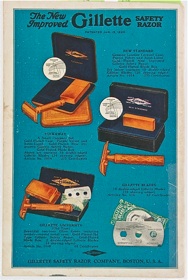
    Soon after United began operation, a lengthy list of other marketers like Wrigley’s gum, Happiness Candy, My-T-Fine desserts, Danish Pride evaporated milk, Luzianne Coffee, Se-Ment-Ol Radiator cement, Holland’s Tea, Swift’s meats and three dozen others joined the “profit sharing” coupon system, the king of which was United Cigar Stores. This expansion gave United the greatest buying power of any retailer in the country, and soon manufacturers of Gillette razors, Rogers silver and other important national brands were making sweetheart deals and supporting display ads in United catalogs. 

    In the days when tags and cigar bands were
the trade items, tobacco commerce was in nickels, dimes and quarters.  Most plugs and most cigars cost 5¢. You got one band or one tag for spending a nickel and certain bands and tags could be redeemed.  In later years, coupons too represented a 5¢ purchase, but those purchases could include gum, candy, matches, and literally hundreds of other products that were carried in the well-stocked United Cigars Stores.

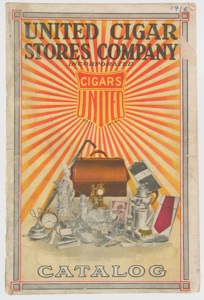
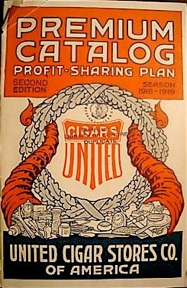
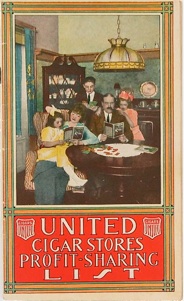
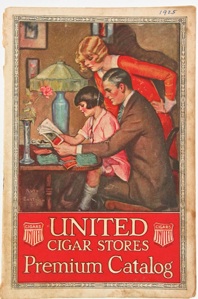
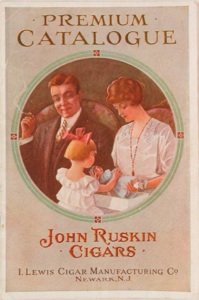
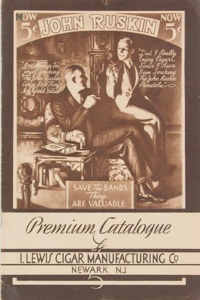
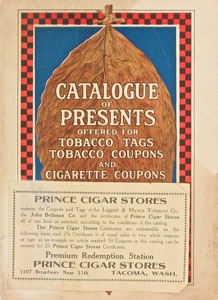
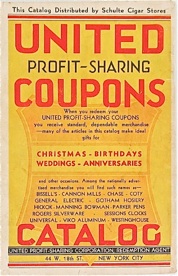
    What that means in terms of this exhibit is that I will focus on the covers of the catalogs and then show a wide range of things you could order from those catalogs, whether in the tag & band era or in the coupon era. These were rewards for being loyal to a particular brand or store.

 

Catalogs & Rewards

A National Cigar History Museum Exclusive

© Tony Hyman


Totally revised: August, 2010

    Tobacco-related premiums (as seen elsewhere in the NCHM) date to the very early 1800’s if not before. In the 1860’s Cuban cigarette manufacturer Luis Susini and his competitors re-instituted the practice of using the package wrappers themselves as premiums. The Cuban innovators began packing cigarettes in sets of colorful pictorial wrappers to induce collecting.

    Paper premiums became important in the United States twenty years later when P. Lorillard and other cigarette manufacturers introduced small photographs of actresses in the small newly adopted (3” x 1 7/8”) cardboard slide-pack. Some researchers believe the goal of these was to stiffen the package, but considering cardboard was already many times stiffer than the paper that had wrapped cigarettes for decades, I give little credence to that theory.  Given the mania for card collecting that ensued for the next quarter century in the U.S. (and three times that long in Cuba and England)  it is more logical to consider those cards to be the first salvo in a fight-to-the-death for supremacy in the world of tobacco manufacturing, and that Lorillard knew exactly what they were doing. They just underestimated the impact. Tens of thousands of different cards were ultimately given away worldwide.

    Meanwhile, the cigar industry was not idle. The earliest cigar give-away I’ve been able to find took place in 1878. An enterprising New York City cigar maker wrapped a tube to resemble a cigar. The smoker who bought and bit the end off the fake discovered the tube, inside of which was the first recorded coupon. Bring the coupon to the factory, and the lucky smoker could exchange it for a brand new pair of suspenders.

    That’s the first I know of. Who was second? ¿Quien sabe?  But the practice of  adding premiums to packages became a hot-button issue with manufacturers and tax officials alike.  Apparently a lot of other cigar makers were putting surprises in boxes, as the government took steps to outlaw the practice. After years of debate and    
lobbying, the first all inclusive anti-insert law, which affected cigarettes, cigars and tobacco was passed in 1900. Man’s imagination could no longer be used to give things away in packages of tobacco products.

    Weight played a role in determining cigar and cigarette tax...and weight margins in cigarette packages were often tight... resulting in taxes going up thanks to the addition of a single card or booklet. Clever companies began attaching premiums onto the outside of individual packs with a paper strip.  As interest in cards waned, tobacco product manufacturers began emphasizing free merchandise attainable by amassing huge piles of redeemable, and nearly weightless, coupons, which remained legal to include as advertising. These small colorful rectangles joined tags and bands as the major weapons of the tobacco monopoly and its adversaries.

    Literally hundreds of millions of coupons were issued by countless companies in equally countless designs and rewards. Tobacco coupons could be exchanged for everything from more tobacco to movie tickets, admission to minor league baseball games, or a grand piano. Obtaining beautiful cards and albums in the late 19th century blossomed into a national obsession for coupons and prizes in the 20th.

   Coupons were given by an endless stream of companies, large and small, for more than half a century. A wide variety of prizes were offered in exchange, sometimes requiring thousands, even tens of thousands, of coupons.


This is one of a series of Exhibits on the topic of various types of premiums and “rewards” given away by the tobacco and cigar industries. For a fuller understanding I encourage you to visit them all.


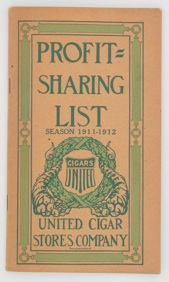
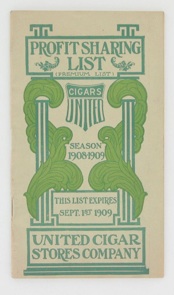
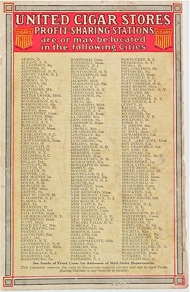
United’s catalogs were first issued in this 4.5” x 8” format. The 1908- 09 catalog has 30 pages, 4 of them with illustrations. The 1911-12 book has 38 pages, 12 with illustrations.

The back of the latter lists 135 redemption cen-ters, many taken over from the Florodora Tag

Company.


American Cigar Co.’s entry for 1901 into the premium wars.  Its 4” x 7” 78 pages offered some fine prizes, but they weren’t cheap. You had to smoke 2,400 cigars to earn this.

1915  54 pages, fully illustrated

Liggett & Myers Tobacco tags

Cigarette and tobacco coupons

1916  50 pages, 12 illustrated

Profit-Sharing coupons only

1916  Not in the NCM collection

1922  42 pages, 20 illustrated

Profit-Sharing coupons only

1925  46 pages, 20 illustrated

Profit-Sharing coupons only

1927  50 pages, 26 illustrated

Profit-Sharing coupons only

1927  26 pages, fully illustrated

    with group photos

John Ruskin cigar bands only

1928  50 pages, 26 illustrated

Profit-Sharing coupons only

1932  24 pages, fully illustrated

John Ruskin cigar bands only

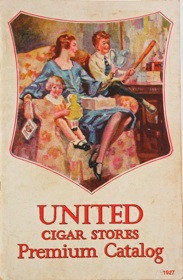
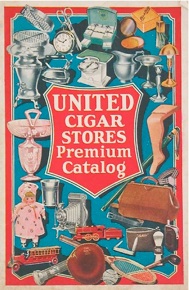
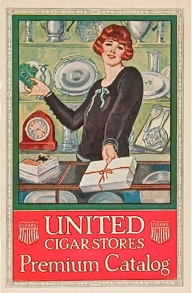
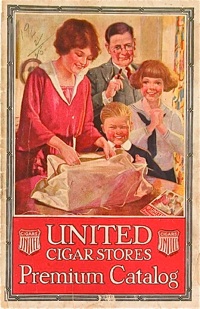
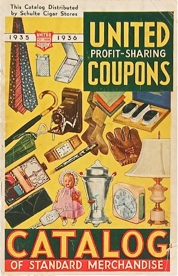
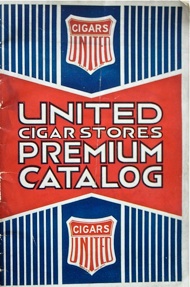
    The above catalogs are a sample of what’s out there. These are roughly 6” x 9” and turn up today with regularity today because astonishing numbers of them were given away between 1900 and 1935, in the case of United Cigar Stores, for roughly 35 years. As a result, they almost always sell for less than $20.

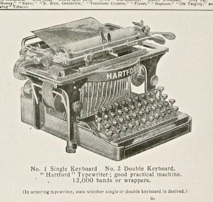
    Cost of the goods shown below is expressed in numbers of cigars someone needed to buy, and presumably consume, to “win” the prize.

NCHM Home        Premiums        Coupons       

Redeeming Coupons